What Is a Mockup? Meaning, Types, Examples & How to Create One
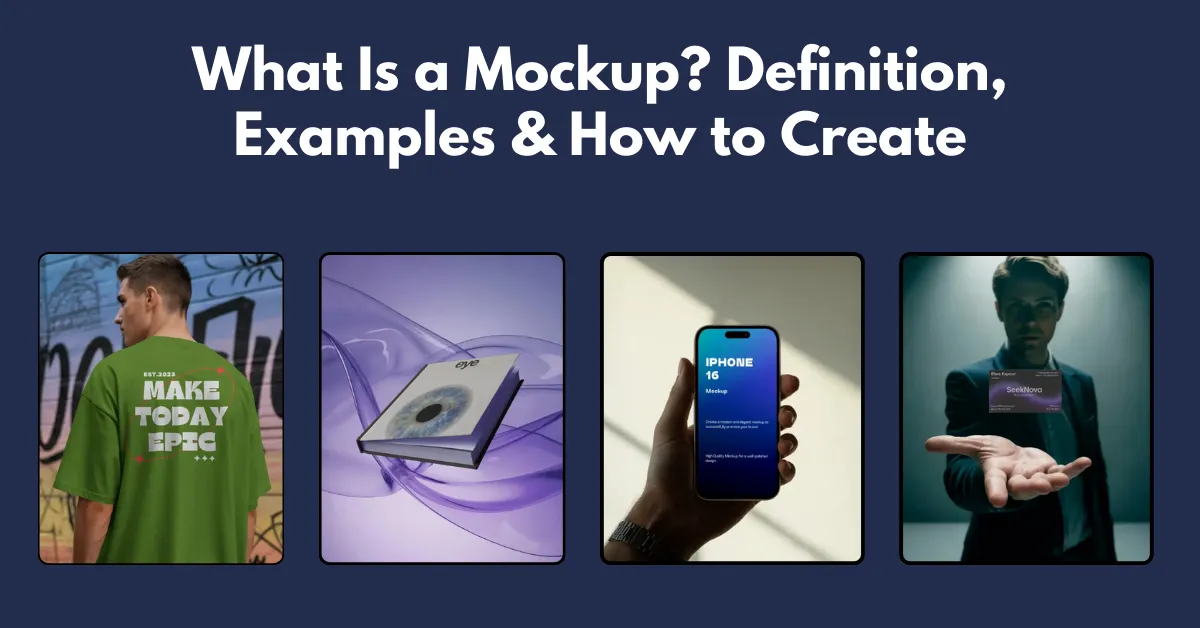
What is a mockup? The meaning of mockup is a realistic visual representation of a product, website, app, packaging, or other design that shows how the final version will look before production or development.
Designers, businesses, and marketers use mockups to review, present, and refine designs before they are launched or manufactured.
Look at the example:
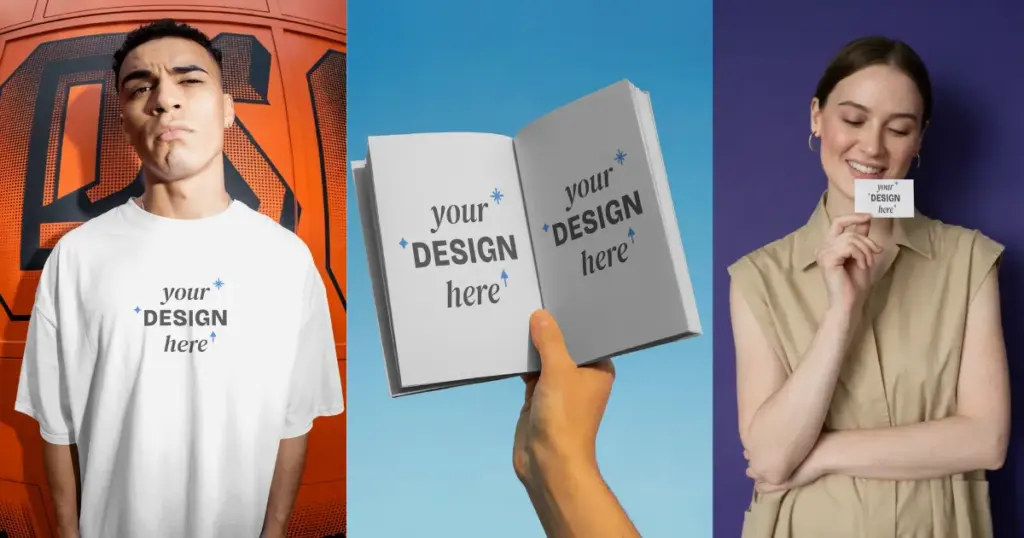
This post explains the mockup meaning, why it’s important, the different types of mockups, real-world examples, how mockups compare with wireframes and prototypes, and how to create one.
Table of Contents
What Is a Mockup?
A mockup is a visual preview of how a design will look when it becomes a reality. In simple terms, it is a virtual representation of a flat design, such as a logo, user interface screen, or packaging design. A mockup can show a phone screen, website layout, product image, or even a person wearing the product.
Turn Your Design Into a Realistic Mockup
Upload your design and preview it on apparel, packaging, print products, devices, and more with Mockey AI.
Mockup Examples
Mockups are easier to understand when you see how they’re used in real situations. Below are common mockup examples that show how designs look before they go live or into production.
T-Shirt Mockup Example
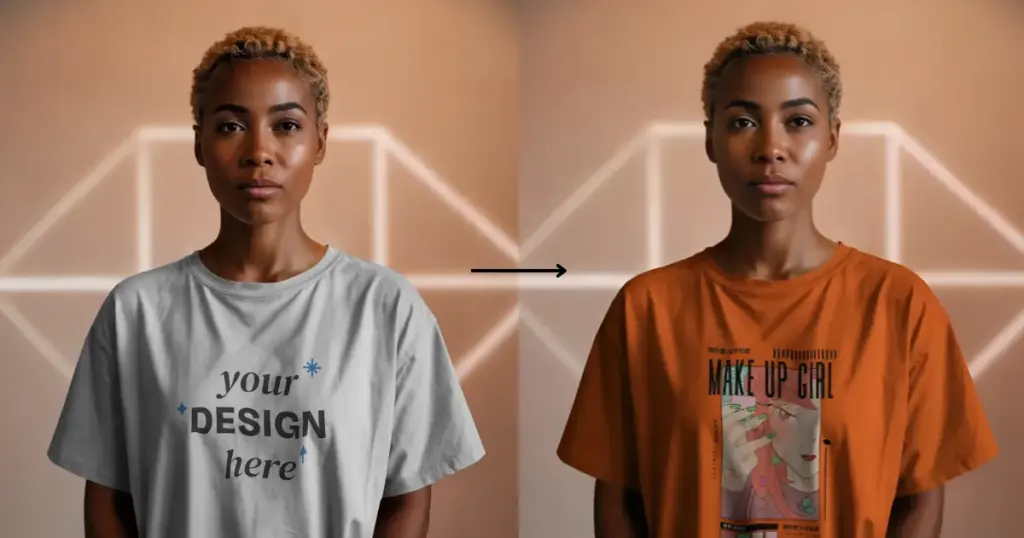
A T-shirt mockup shows how a design looks when placed on a realistic T-shirt. The mockup puts it on a model, a flat-lay, or a hanging T-shirt.
Website Mockup Example
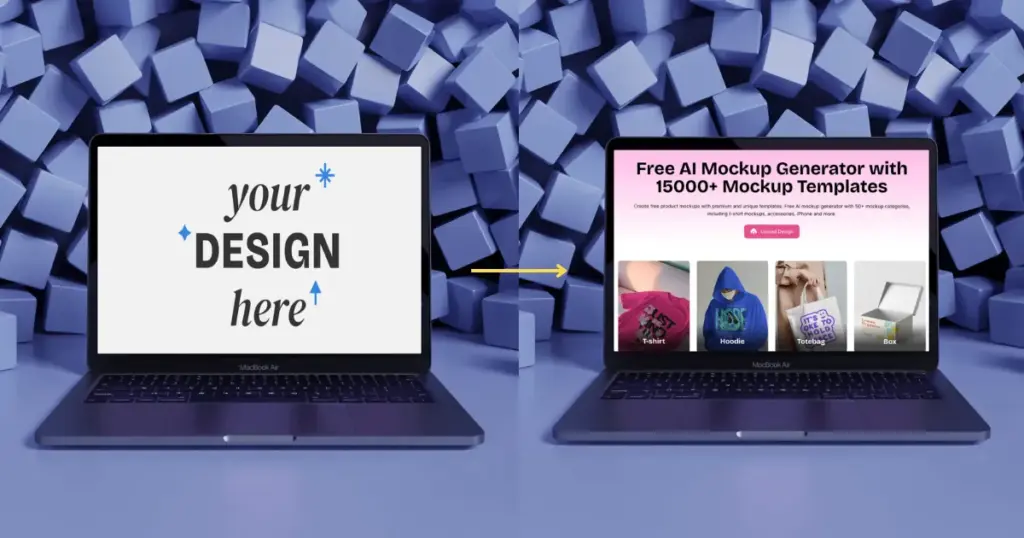
A website mockup shows how a website will look. It usually includes layout, colors, fonts, images, and spacing. There are no clickable buttons or real interactions involved.
Packaging Mockup Example
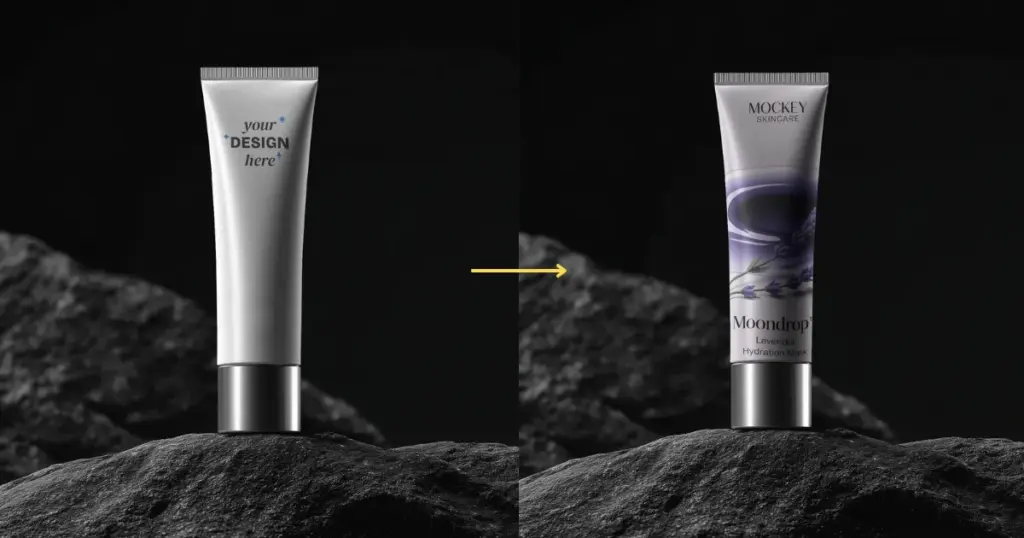
A packaging mockup shows how branding looks on physical packaging like boxes, bottles, pouches, or jars. Packaging mockups help you judge branding in the real world.
Social Media Mockup Example
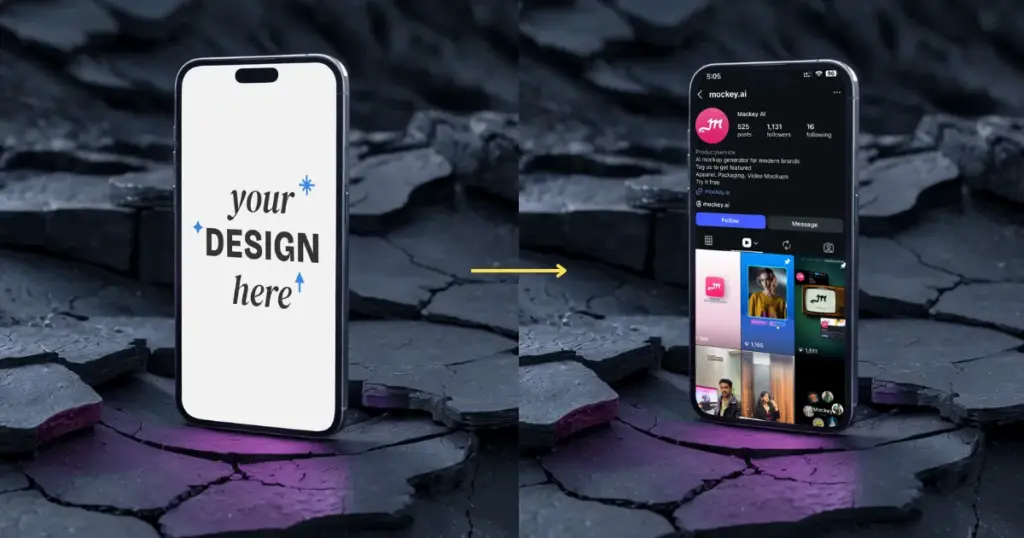
A social media mockup shows how a post or ad will look inside a real platform layout. The mockup places it inside Instagram posts, Stories, Facebook ads, and Feed previews.
If you want to learn how to create a no watermark mockup with simple steps, we’ve got a whole guide that focuses on that.
So, you have got the answer to this question: What is a mockup? Now, let’s discuss why mockups are important.
Why are Mockups Important?
Without mockups, it can be difficult to communicate how a product or design will look before it is built or manufactured. Mockups support design reviews, marketing campaigns, client presentations, stakeholder approvals, and product validation.
Mockups help teams and businesses:
- Visualize the final design before production.
- Gather feedback early.
- Align designers, clients, and stakeholders.
- Improve marketing presentations.
- Support sales and product launches.
- Reduce costly revisions.
1. For the Marketing Team
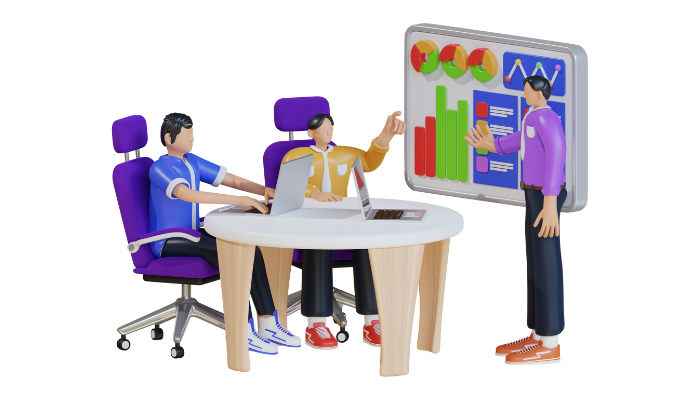
Marketing teams use mockups to create realistic campaign visuals, advertisements, and promotional materials before launching a campaign.
For a long time, marketing teams have been using mockups to show professional marketing visuals. These ads help people see how a product can be useful to them and make them want to do something about it.
2. For Design Teams
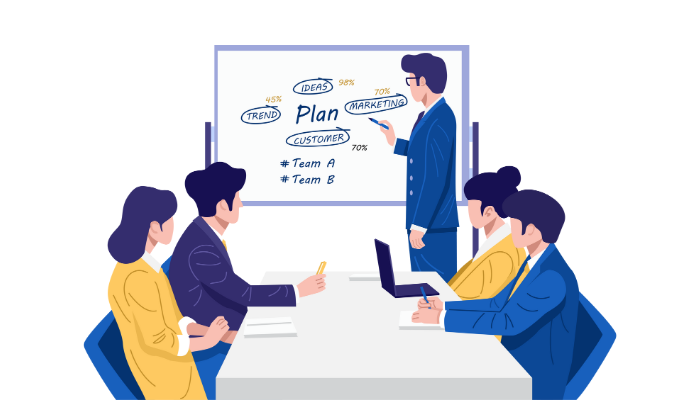
Design teams find mockups helpful. Mockups help design teams review layouts, branding, colors, and visual consistency before development begins. When a mockup is done well, it makes sure everyone in the team understands what they’re working towards, which leads to an outcome that matches the actual design.
3. For Investors
Mockups help investors understand a product idea through realistic visual presentations before development begins.
A neat and professional mockup can convince investors to support and invest in the product.
If you want to make your presentation to investors more impressive, think about including some mockup photos in your pitch deck.
8 Types of Mockups
| Type of Mockup | Primary Use | Examples |
| Product Mockups | Preview products before manufacturing or selling | Mugs, Cans |
| Branding Mockups | Visualize logos and brand identity | Business cards, bottles, stationery |
| Print Mockups | Preview printed materials | Posters, flyers, brochures, books |
| Packaging Mockups | Test packaging designs | Boxes, pouches, cosmetics, bottles |
| Device Mockups | Display digital designs | Desktops, mobiles, laptops |
| Social Media Mockups | Preview social media content | Instagram posts, Facebook ads |
| Apparel Mockups | Showcase clothing designs | T-shirts, hoodies, sweatshirts |
| Accessories Mockups | Display accessory designs | Caps, tote bags, phone cases |
Mockups come in different types depending on what you want to design or present. From product and packaging mockups to device and social media mockups, each type helps visualize a design before it is produced, printed, or published.
1. Product Mockups
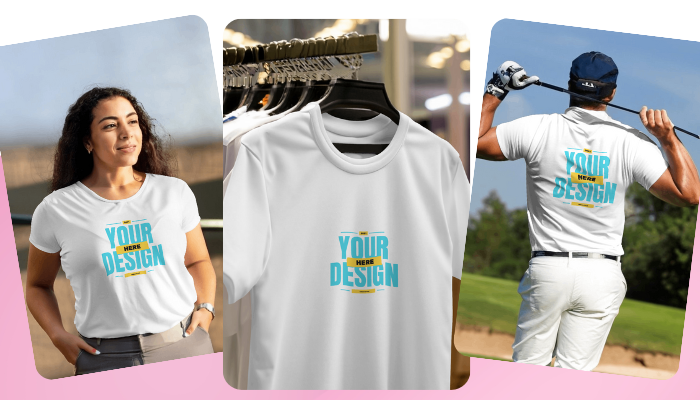
Product mockups are realistic previews that show how a product will look before it is manufactured or sold. Designers, brands, and e-commerce sellers use product mockups.
For instance, lots of online stores prefer using t-shirt mockups to put their designs on a template instead of taking pictures of each shirt in all different styles.
Mockup templates simplify the design part of creating product mockups. If you need free templates for t-shirts, hoodies, or other products, take a look at Mockey’s** mockup generator**.
2. Branding Mockups
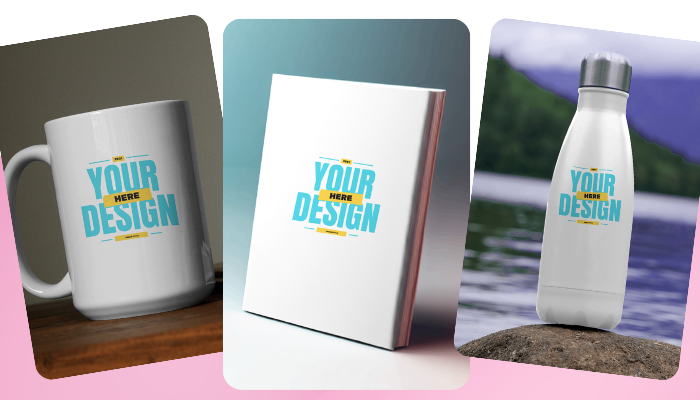
Branding mockups show product images with company logos or mottos. You can make more people know and trust your brand by putting your logo on items like books, cups, bottles, and other objects.
Mockups for branding can help businesses that are thinking about launching a unique marketing campaign.
Before deciding how to spend the funding on various branded items, the owners can be presented with branding design ideas to assist them in choosing which objects to brand.
The main products of a company do not need to be directly related to branded items.
A small restaurant can put its logo on pens to help people remember its brand. Branding mockups let you preview different designs and choose the one that fits your business best.
3. Print Mockups
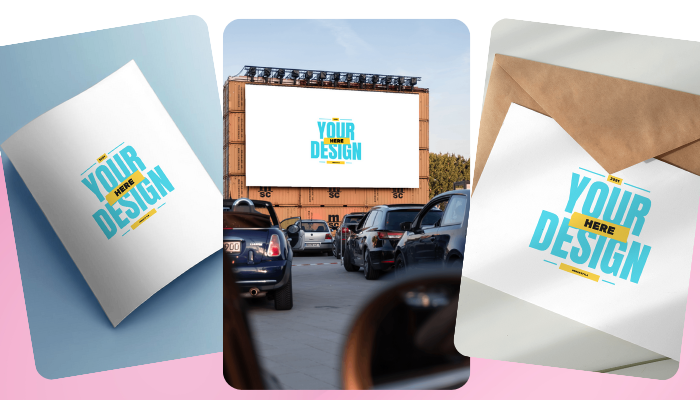
Print mockups are a realistic rendering of what a print design might look like once it’s turned into a physical print. It helps you see how it will appear after it’s been printed.
Making print mockups lets you see how your design will look on objects like postcards, flyers, banner mockups, lanyard mockups, and poster mockups.
Apart from checking how everything looks on the page, a print mockup can also make sure that the text is easy to read before it gets printed.
Moreover, using print mockups is a great way to make attractive pictures of your ebooks, greeting cards, and different printable marketing elements. Instead of just showing a plain screenshot of the cover page, try making a stunning mockup that can help get more people to download and become potential leads.
4. Packaging Mockups
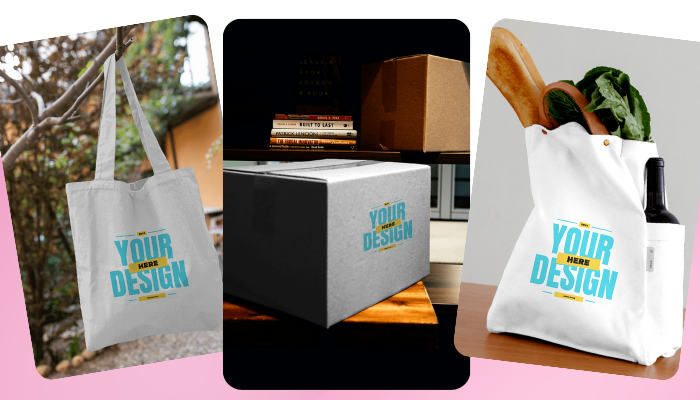
Packaging mockups are images that show your logo and design on different types of packaging, such as bottles, cosmetics, perfumes, and more.
The way you wrap your product is not just about putting it in a bag or box when it comes to marketing.
Creating a sample packaging design can greatly improve the quality of the packaging.
Designing a mockup can assist you in making packaging that matches your company’s principles and ensures your customers have a memorable unboxing experience.
5. Device Mockups
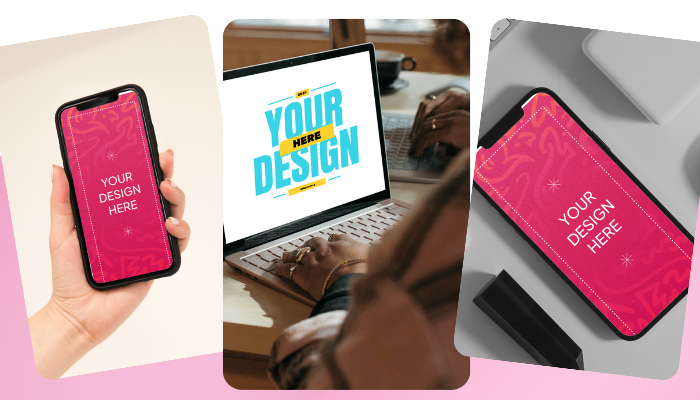
Device mockups are a picture representation of a device that allows you to customize the screen—be it a computer, tablet, phone, or smartwatch—with your own design.
Mockey AI’s device mockup generator allows you to share eye-catching designs of your websites or apps instead of just a basic snapshot.
Tech companies can also benefit greatly from this kind of mockup, which helps them decide how their website or app will look.
6. Social Media Mockups
Before publishing your content to the website, you can input and view it using social media mockups, which are a representation of several social media platforms.
Using a social media mockup helps brands and businesses make sure their posts look good on all kinds of devices by checking their size and layout.
Furthermore, a social media mockup can be a useful graphic to include in marketing plans, blog posts, or to publish on social media.
7. Apparel Mockups
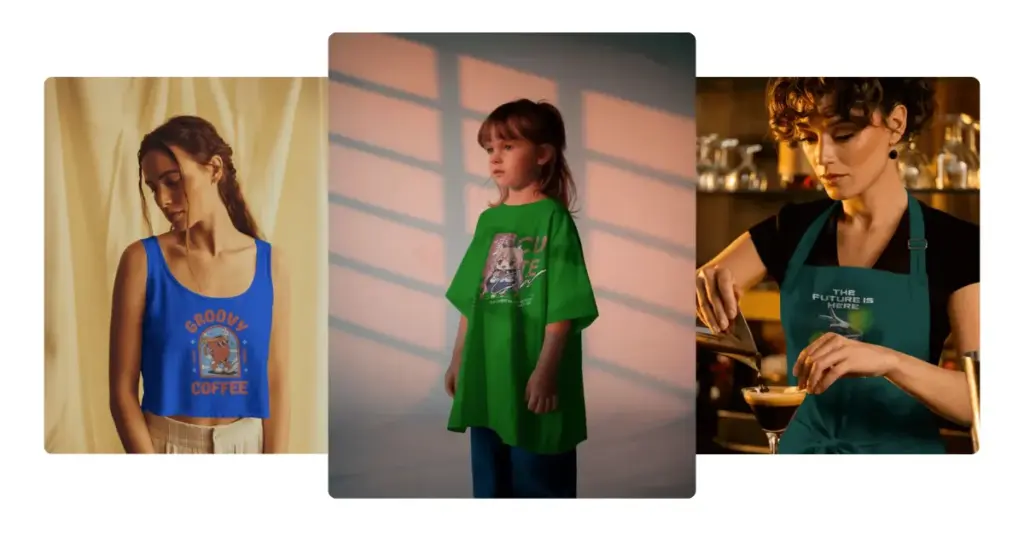
An apparel mockup is a model of a clothing item, such as a T-shirt or hoodie. It can be digital or physical. Designers and brands use it to see their designs before making the real product. Think of it as a ready template. You place your design on a blank garment and get a clear preview of how it will look.
In Mockey AI, you can customize more than 5,000 popular apparel mockups.
8. Accessories Mockups
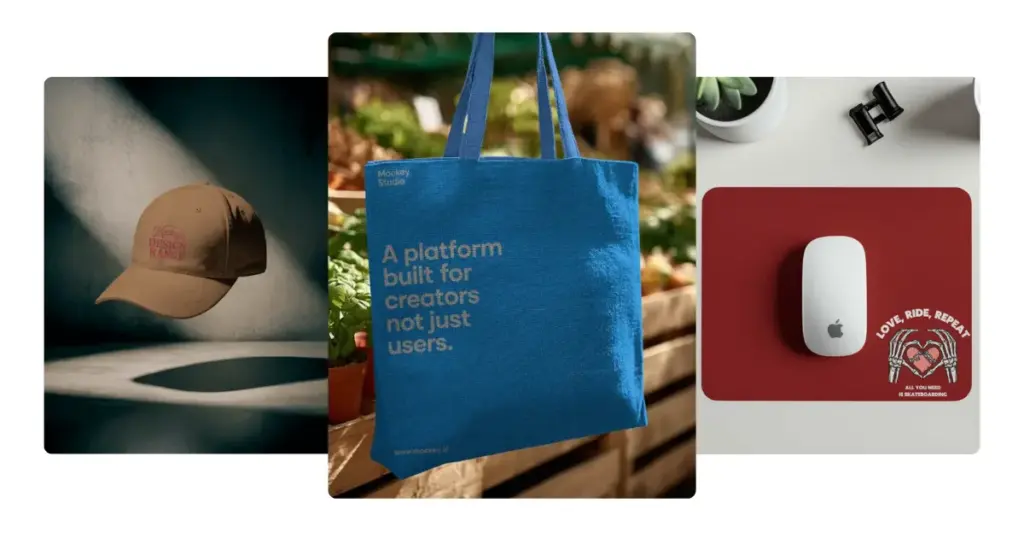
Accessories mockups showcase products such as caps, phone cases, tote bags, gaming accessories, and similar items.
Your product looks professional and appealing before it’s actually produced with these mockups, which enable you to display accessories in various styles, such as angled shots, close-ups, or other creative perspectives.
Find the Right Mockup for Your Design
Explore realistic mockup templates for T-shirts, packaging, print designs, devices, accessories, and ecommerce products.
Wireframe vs Mockup vs Prototype — Quick Comparison
In UX/UI and product design, words like wireframe, mockup, and prototype get mixed up all the time. A wireframe focuses on structure, a mockup shows the visual design, and a prototype demonstrates how the product works.
Wireframe (The Blueprint)
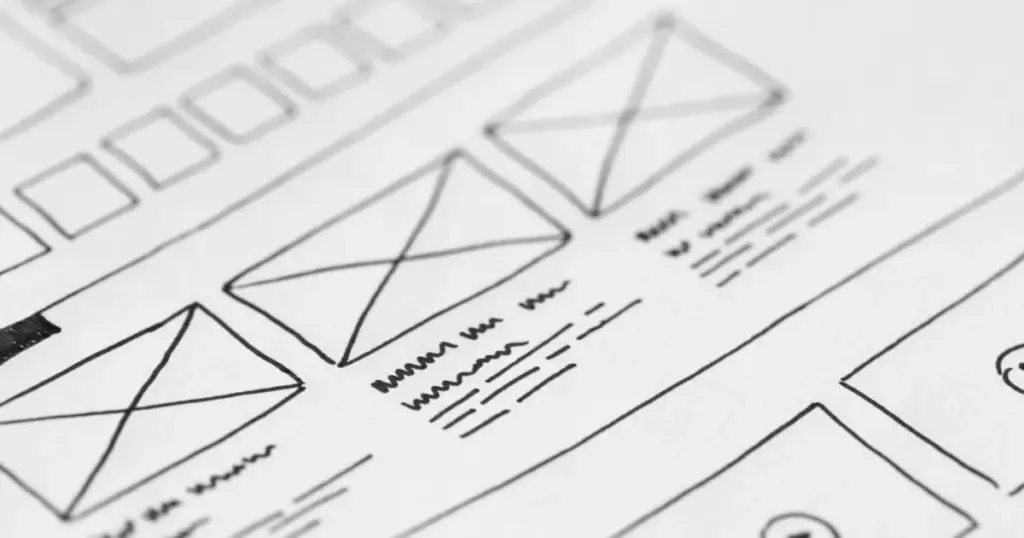
A wireframe is a rough layout that shows where elements will sit on a page or screen. It focuses on structure and flow, not visuals or styling.
Most wireframes are in grayscale, using boxes and placeholder text. Wireframes are mainly used to get early feedback on layout, navigation, and how information is organized.
Mockup (The Visual Preview)
A mockup design is a high-fidelity but static version of a design. It shows how the final product will look, not how it will work. You see the colors, fonts, icons, images, and branding laid out properly, but nothing is clickable.
The main purpose is visual agreement. It helps everyone align on the look before any real development starts.
Prototype (The Interactive Version)
A prototype takes a mockup a step further and makes it interactive. Buttons respond, screens move, and basic actions work, even though it is not built with real code yet.
Prototypes are mostly used for usability testing, checking user flow, validating interactions, and spotting problems early before development starts.
Wireframe vs Mockup vs Prototype Comparison Table
The table below summarizes the main differences between a wireframe, mockup, and prototype to help you choose the right design stage for your project.
| Feature | Wireframe | Mockup | Prototype |
| Purpose | Plan the layout and structure | Show the visual appearance of the design | Test how the design works |
| Appearance | Basic sketches or outlines | Realistic visual design | Interactive design |
| Colors & Images | Usually not included | Included | Included |
| Interactivity | ❌ No | ❌ No | ✅ Yes |
| Used In | Planning stage | Design review | User testing |
| Main Goal | Organize content and layout | Present the final look | Validate the user experience |
Who Uses Mockups and Why?
Mockups are used by a wide range of people and for a variety of reasons.
1. Designers
Designers use mockups to show final visual decisions like colors, type, spacing, and image placement, without coding.
2. Product Managers & Stakeholders
Product managers and stakeholders use mockups to review and approve visual direction, align on product scope, and decide whether something’s worth building.
3. Developers
Developers use them as a visual spec for CSS/layout, assets, and edge cases.
4. Marketers & Social Media Managers
Marketers and social media managers use them to test ad creatives, preview social posts, and produce campaign visuals quickly.
5. E-commerce Sellers & Product Photographers
Product photographers and e-commerce sellers use them to create product presentations like hoodie mockups, socks mockups, and similar products when real photos take too much time or cost too much.
6. Clients & Non-design Stakeholders
Clients use mockups to review designs or to sell an idea internally before it goes any further. Stakeholders can simply point at the screen and say “change this,” instead of guessing.
Mockey AI Insight
Based on thousands of mockups created with Mockey AI, users most often compare multiple versions of the same design before downloading a final mockup. Previewing different products, colors, and backgrounds helps reduce design revisions and improves presentation quality.
Best Practices for Creating Realistic Mockups
Product mockups can save a lot of money while you work on the real product. But if you get them wrong, the mistakes can snowball and send your project in the wrong direction.
Follow these tips to stay on track:
- Know your product inside out.
- Be clear about its main message.
- Tell a story through your design.
- Understand your audience and their needs.
- Start with simple templates.
- Keep user value at the center.
- Use real screenshots or photos.
- Make it look realistic.
- Keep your files neat and easy to follow.
- Match backgrounds and colors with your brand.
- Test the mockup and get feedback.
- Be open to making changes.
- Let your mockup guide what comes first.
What are Free Mockup Tools?
Choosing the right mockup tool makes it easier to create professional mockups efficiently.
It is true that the best mockup tools provide a wide selection of high-quality images, as well as a vast set of templates; however, not all of them are completely free of charge.
Many mockup generators are free and feature-rich.
1. Mockey AI
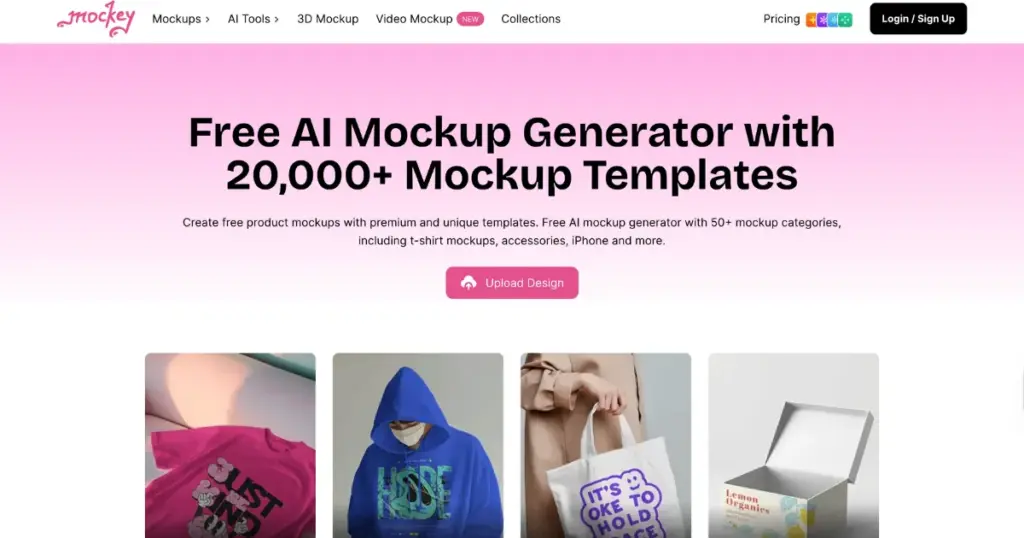
Mockey AI offers ready-made templates, AI editing tools, and customizable mockups across multiple product categories.
When you want to make a really detailed mockup of your logo or design without too much hard work, the best generator to use is Mockey.
A large selection of templates, more than 30,000, lets you instantly incorporate the design into a scene using Mockey’s software.
Mockey is the perfect Smartmockups and Placeit alternative generator if you are looking for high-quality templates.
Mockey is a product mockup generator; don’t consider it a website mockup tool.
Why is Mockey the Best Free Mockup Tool?
Here are the main benefits:
- 30,000+ customizable mockup templates
- Over 60 products
- 3D mockups and video mockups
- A free plan comes with no watermark
- Affordable premium plans at $7 – $9.90/month
- AI design tools
2. Mockuper
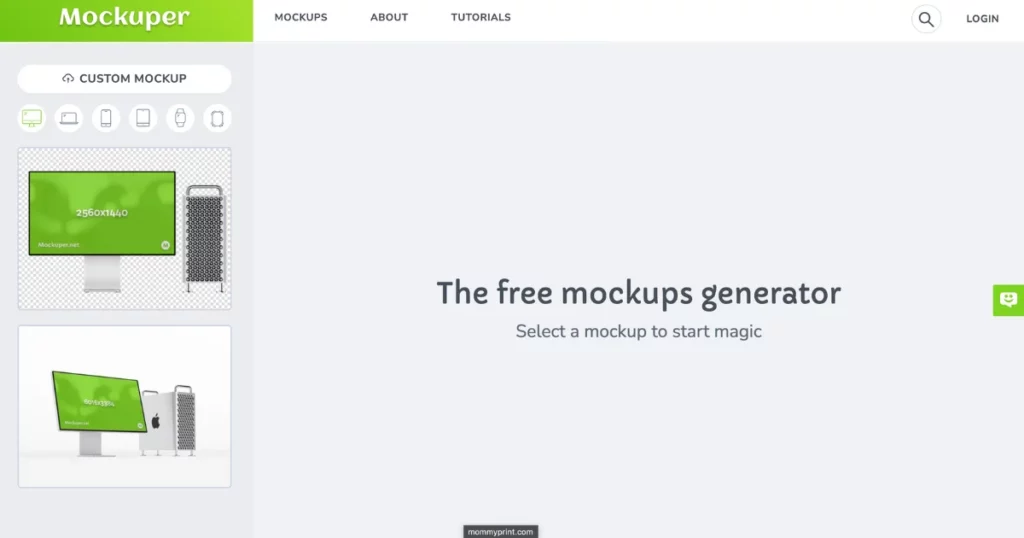
If you want a free mockup generator, Mockuper is a great choice. It offers more than 800 templates, making it a large collection of mockups for free.
Unlike other mockup generators, Mockuper lets you customize things like screen reflections and background color (on some templates), and add extra layers like text overlays.
Mockuper is super simple to use, letting you make designs in seconds. If you’re on a budget and need good mockup images, give it a try.
3. Mockup.Photos
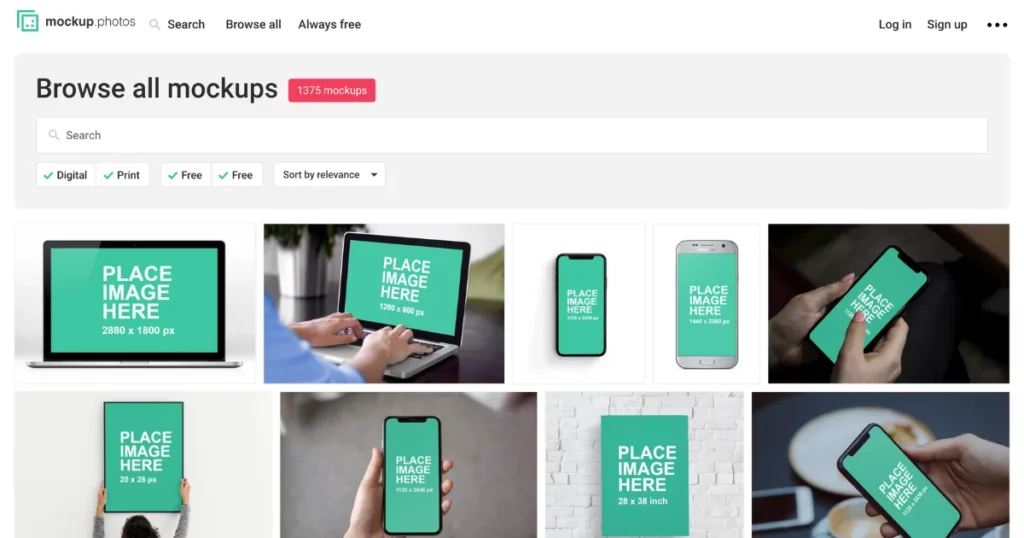
Another great mockup generator is Mockup.Photos. It offers a large collection of 1500+ templates. Most of the images come from stock sources like Unsplash and Pexels.
Most of the templates on the site feature devices like iPhones, smartwatches, desktop screens, and tablets, but there are also some for billboards, posters, and a free book mockup.
Mockup.Photos is a great tool to try out because it’s completely free.
4. MockupBro
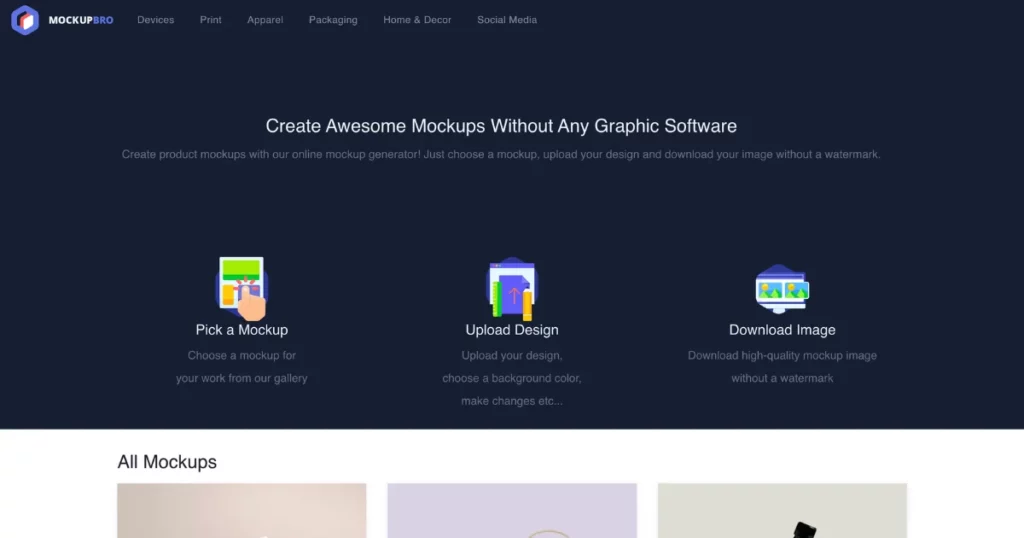
Next, try MockupBro—a free, easy-to-use mockup generator. Just pick a template, change the background color if you want (on some templates), add your design, and download it. It’s quick and simple!
The only drawback of MockupBro is its small selection of mockup templates—there are only about 84 available. However, everything on the site is completely free, so if you’re looking for quality mockups for free, MockupBro might have what you need.
How to Create Mockups?
To create mockups:
- Open the Mockey AI mockup generator in your web browser.
- Create an account and click on Mockups for a template.
- Upload your design.
- Adjust the mockup as needed.
- Download it as a PNG or use it in your design.
How to Create Mockups on Mockey
You can quickly upload your design or logo by clicking “Upload Design,” and it will instantly create a polished mockup for you. Follow these steps to create a mockup using Mockey AI.
1. Visit Mockey.ai and Sign Up
Visit Mockey.ai and click on the “Mockups” category in the navigation bar on the homepage, and select any products you like to create mockups. Make sure you sign up there if you are new.
With this free website, you can access many professionally made templates for various types of mockups and presentations.
2. Choose Your Template to Customize
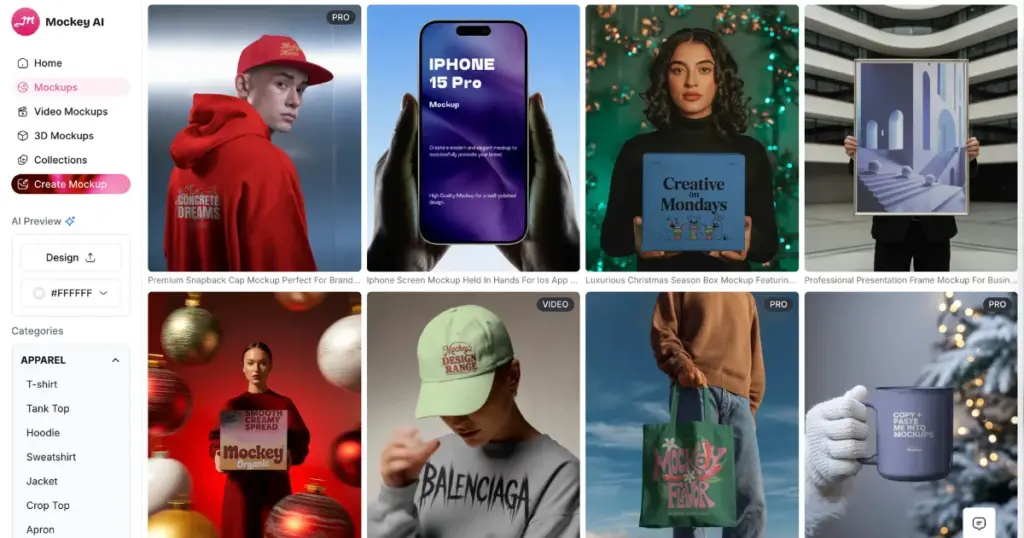
When you begin a new project, you have the option to select from a vast collection of templates created by expert designers, with over 30,000 to pick from. You have the option to select from more than 60 different products.
3. Free Customizable Feature
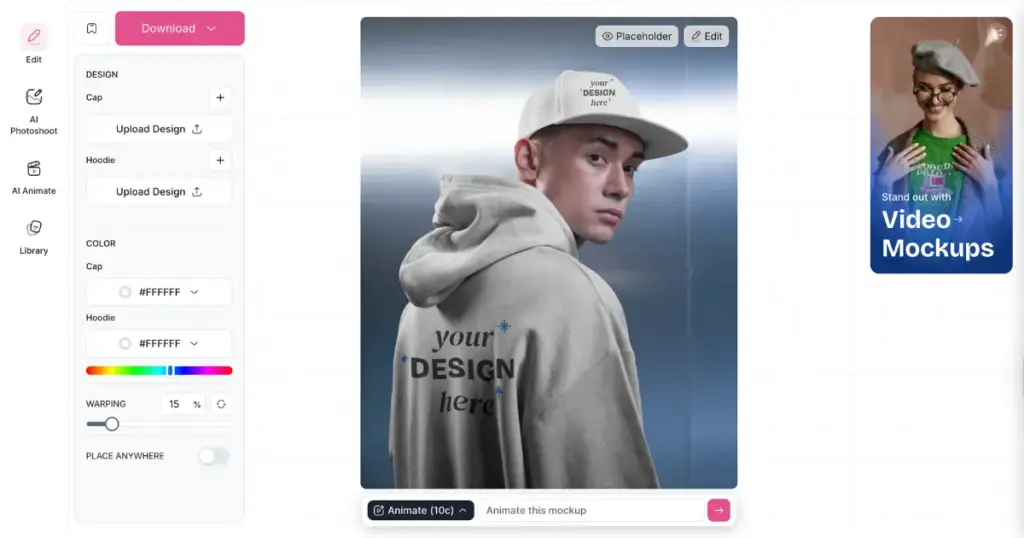
Now, you have the option to personalize your design using the editor section. You can switch up the colors, use the warping feature and AI tools, and adjust the size of your design.
4. Lastly, Download Your Mockup with No Watermark
Once you’ve made the changes you wanted, it’s time to get your customized mockup. Simply click on the “Download” button, and it will save to your device.
Your design can be downloaded without any watermarks.
Ready to Create Your First Mockup?
Choose a template, upload your design, customize the result, and download a professional mockup in minutes.
Get the Free Mockey App
Mockey also offers a free Android Mockey AI app that lets you create and customize mockups on mobile devices.
In the app, you’ll also find a section where you can check out the latest mockup templates that have been added.
Conclusion
To conclude, you got your answer to the question, “What is a mockup?”
A mockup is a realistic visual representation that helps designers, businesses, and marketers review ideas before production or development. Whether you’re creating products, websites, packaging, or marketing materials, mockups make it easier to present concepts, collect feedback, and reduce costly revisions.
Ready to create your own mockups? Try Mockey AI to customize realistic templates for products, apparel, packaging, print, devices, and more—all online.
FAQs
Mockup meaning in UI design?
What is a mockup in UI design? UI mockups are representations of what a finished digital product will look like. It shows how elements are arranged, the colors used, the fonts, and the icons.
What is the purpose of a mockup?
Mockups are visual representations of designs, products, or concepts. It is designed to bring a concept or wireframe to life and lets a designer evaluate how different visual elements interact with one another.
What is an example of a mockup?
An example of a mockup is a digital design prototype displaying the layout, colors, and elements of a website or app without highlighting its functionality.
What is a mockup generator?
What is a mockup website? A mockup generator is an AI tool for print-on-demand. It helps you make a realistic picture of your design on a product without making the real product. This way, you can show off the designs to possible buyers and see how they’ll look on the actual product.
What is mockup in Figma?
A Figma mockup is a detailed visual of a design used to show ideas to others or test layouts before they’re developed. It helps designers make realistic previews of websites, apps, and other digital products using mockups of devices.
Who can create a mockup?
You can make a product mockup by using templates, mockup generators, or by designing one from scratch with tools like Mockey.ai. This helps you see how your designs look on products, get feedback, and test ideas before making them.
Related reading:
- 10 Best Mockup Tools to Create Product Mockups
- Wireframe vs Mockup vs Prototype
- How to Make Book Mockups for Free
- How To Make Hoodie Mockup (3 Easy Steps)
- How to Make a Frame Mockup in 3 Easy Steps
- 10 Best T Shirt Mockup Sites
- 10 Best Mockup Websites for Stunning Design Templates
- How to Make Clothing Mockups – Quick Guide
- How to Make T Shirt Mockup

Sangram Sahoo
I’m a content writer with 4 years of experience. I specialize in creating practical content around mockups, print-on-demand, apparel, and e-commerce design.